Split Economy Data, Voter Sentiment Diverge Ahead of Vote
An economist attributes the gap between national figures and household budgets to how growth is distributed across income levels.
By Allison Cooper ·
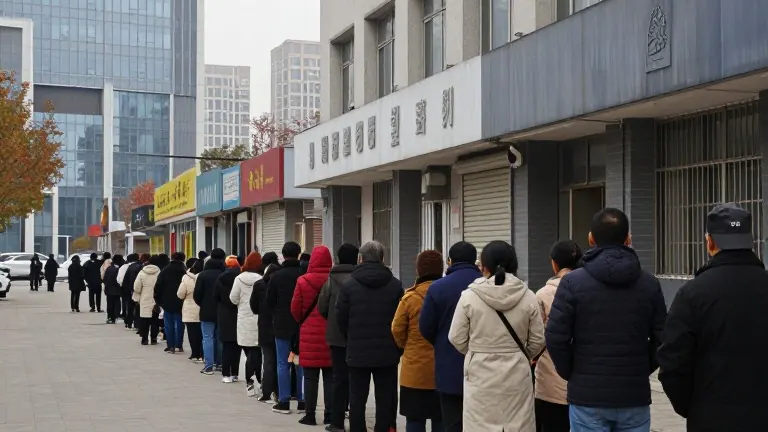
Economists are describing a split in the U.S. economy as voters head to the polls, with national indicators diverging from the financial reality many households report. Alessandro Rebucci, an economics professor at Johns Hopkins Carey Business School, said the disconnect stems from how gains are shared. "Voters reflect the perception of the cost of living as they experienced, as opposed to what is in the data," Rebucci said. "In the data, you have an economy that is very strong as a whole. How that pie is distributed affects how a large segment of the population and the voters are feeling about the economy right now."
The pattern, which some economists call a "k-shaped" economy, contrasts the financial position of high-income earners and asset owners against that of middle and lower-income earners. Rebucci said wealthier households spend a larger share of their income and wealth than poorer households. "To be concrete, the wealthiest households are presumed to spend much more than the lowest ones, not only in absolute terms, which is obvious, but also as a share of their income and in their wealth," Rebucci said.
President Donald Trump has promoted the strength of the national economy at campaign events. At an Aug. 5 rally in Las Vegas, he said, "The economy is the greatest economy we've ever had, by far." His statements have run against what recent consumer surveys have recorded about voters' economic opinions.
Rebucci said the country has a record of living with uneven economic outcomes. "This is an economy that is comfortable with inequality," he said. "The issue is not about eliminating the inequality, but to adjust the system in such a way that we can live better with that inequality."
Rebucci added that voters need to believe advancement remains possible. "In particular, the most important thing that people need to be perceiving is that they've got a shot at being in that top 10%, top 1%," he said.
Source: WQCW · original report published
More News · Charleston news · Report a business · Got a Story?