Sedona crystal owner warns of fakes flooding market
Jamie Inglett, who runs a local shop, says buyers should verify origin and check physical traits to avoid paying premium prices for synthetic stones.
By Daniel Kim ·
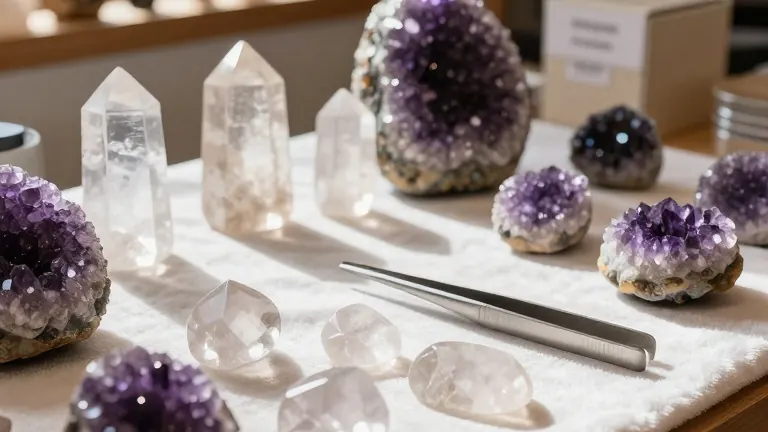
Jamie Inglett, who owns a crystal shop in Sedona, Arizona, is urging buyers to inspect gemstones closely before paying for them. The local retailer says fake products are now common in both physical stores and at gem shows.
The demand for crystals has surged in recent years. On the social media platform TikTok, the hashtag #crystals has accumulated 20 billion views. Inglett leveraged this online interest to build a following of 215,106 people on Instagram. She later opened her brick-and-mortar storefront in Sedona after finding success selling digital content.
Inglett says the market is saturated with imitations. She recently purchased a lab-grown crystal from another shop in Sedona for more than $100. She found the same item listed online for between $5 and $20. “You’ll see hundreds of these, depending on the store. They’ll all look about the same,” Inglett said.
Shannon Wimberly, a crystal collector who has spent several years in the hobby, said she has bought fake crystals in the past. She now scrutinizes her purchases more carefully to avoid the cost. “I absolutely know I’ve run into getting fake ones, so I started scrutinizing other things more and more,” Wimberly said.
Inglett recommends that customers ask sellers for the country of origin or the specific mine name. If a seller cannot answer these questions, buyers should proceed with caution. Sellers must also disclose if a stone is lab-grown rather than naturally mined.
Physical tests can reveal synthetic materials. Glass fakes often sound different when tapped, do not get cold to the touch, and show unnatural dye patterns. Fake moldavite typically appears too uniform in shape and lacks the natural grooves and textures found in genuine stones.
Inglett noted that lab-grown crystals are acceptable if sellers are transparent about the product. “As a consumer you really kind of have to do your own research,” Inglett said. She added that buyers do not need to believe in crystal healing to appreciate the beauty of genuine stones.
Source: WQCW · original report published
More Business · Charleston news · Scam Watch · Report a business · Got a Story?