Michigan Voters Say They Are Worn Out as Senate Campaign Rhetoric Heats Up
While President Trump's attacks on Democrat Abdul El-Sayed grow more personal, voters interviewed in Michigan say they care more about costs and are exhausted by the campaign.
By News Media House Staff ·
As President Trump campaigns in Michigan for Republican Senate candidate Mike Rogers, his criticism of Democratic opponent Abdul El-Sayed has become increasingly personal. Among other things, he has called El-Sayed a "jihadist."
NPR's Michel Martin, reporting from Ann Arbor, said that tone contrasts sharply with what voters say they are focused on. Speaking with Morning Edition host Steve Inskeep, she relayed what NPR's Member station colleagues who live in the state had found: the rhetoric is "not top of mind" for many residents.
Instead, Martin said, people are worried about the price of gas, groceries and health care. "And I got to tell you, a lot of the voters we talk to here are just burned out," she said.
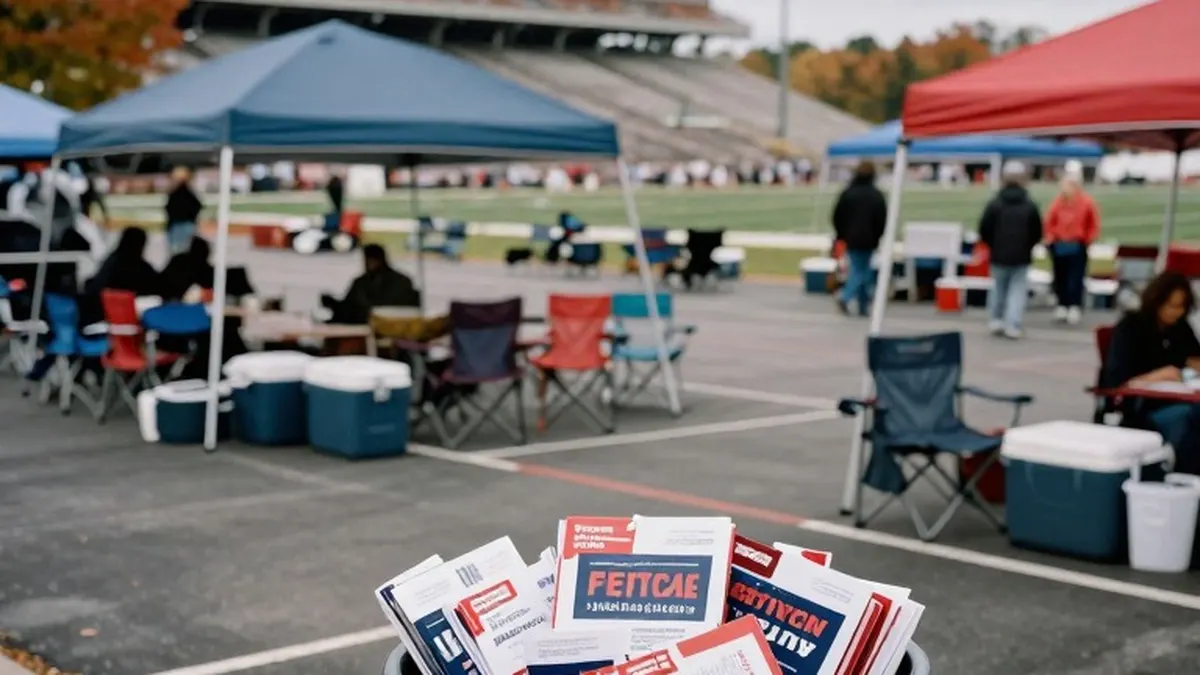
That fatigue shows up in small ways. Some voters are tossing out stacks of political mailers. One woman told Martin she cast her ballot early simply to be done with the campaign.
Dissatisfaction with the two-party system is also a factor. At a University of Michigan football tailgate, Nick Janosi said he plans to vote for El-Sayed but wishes he had more options. "I would love to see more independent, middle-of-the-road candidates that kind of take the best of both parties," he said.
A similar view came from Josh Snell, who was at a Detroit Lions tailgate. He voiced frustration with the two-party system and said he would probably vote for Rogers, pointing to his opposition to Trump's Canadian tariffs.
Martin also noticed another change: voters are increasingly reluctant to talk openly about their politics, in part because they fear how others will respond. "A lot of people are afraid because of the violence involved," Snell said.
Inskeep said he had seen something comparable in North Carolina, where voters avoided mentioning Trump by name.
Martin said the hesitation to discuss political preferences across Michigan was "worse than I've ever seen it," no matter which candidate a voter backed. In Ann Arbor, she did find more people willing to speak publicly about supporting El-Sayed. She said she could not tell whether that reflected stronger enthusiasm for him or a reluctance among Rogers supporters to speak up.
Originally published by News Media House · Source: NPR
More News · National news · Report a business · Got a Story?