Democrats in Congress Build Election Protection Network Ahead of Midterm Fraud Claims
A coordinated task force of Democratic lawmakers, litigators and good governance groups is preparing legal and organizing responses to what members fear could be baseless fraud allegations after the midterms.
By News Media House Staff ·
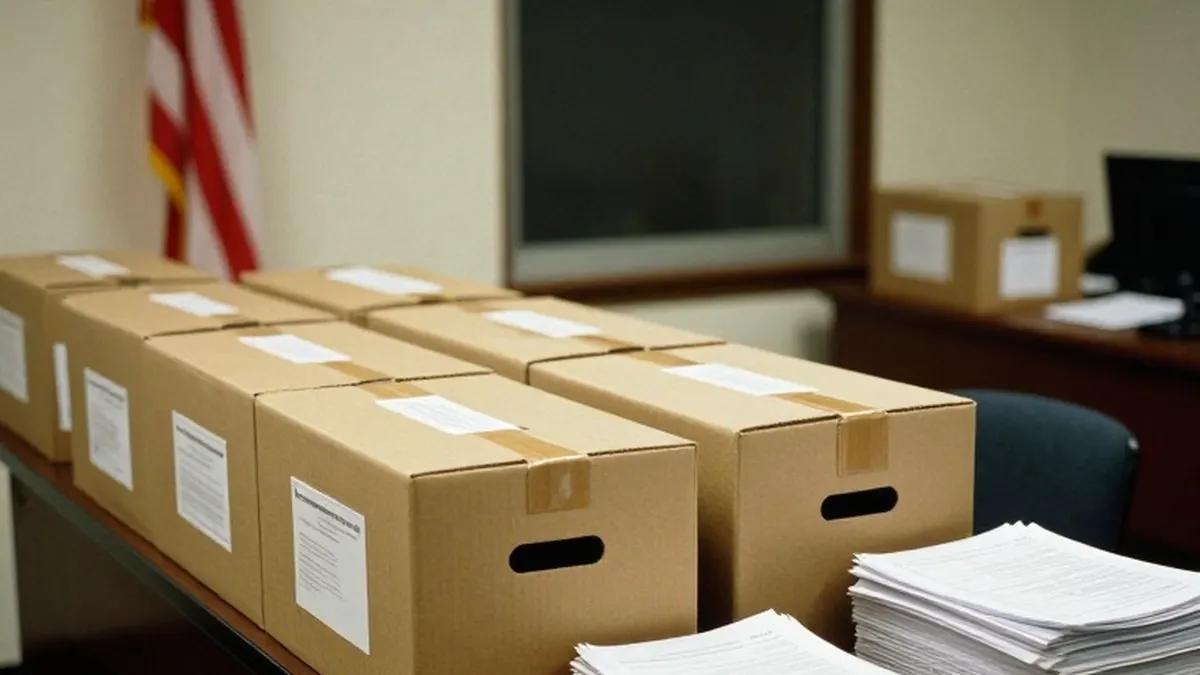
Democratic lawmakers and their allies are preparing for the possibility that the Trump administration will use routine features of American elections as evidence of fraud. NPR spoke this summer with more than a dozen people who describe themselves as an election protection task force, a coordinated effort among Democratic legislators and staffers, election litigators, scholars and nonpartisan good governance organizations.
This midterm cycle, the administration has gathered millions of state voter records for law enforcement purposes, sought to restrict mail-in voting nationwide, skipped the usual invitation to international election observers and repeatedly floated sending armed federal personnel to voting locations. It broadly describes these steps as protecting election integrity after the president's SAVE America Act foundered in the Republican-led Senate. White House spokeswoman Lauren Bis told NPR in October that Trump "has done more than any other President to ensure we have free and fair elections."
Task force members worry that slow vote counting in places like California and Alaska, a normal if poorly understood feature of the system, could be presented as fraudulent behavior. They also argue the executive branch has inserted itself into a state-led process without constitutional authority. Their main goal is to prepare the public and state and local officials to act so results are honored.
Justin Vail of Protect Democracy, a former special assistant to President Joe Biden, said the president's July remarks urging passage of the SAVE America Act were meant to sow doubt about November's elections. He described a three-step playbook: deceive, disrupt and deny. Studies and investigations have found voter fraud to be vanishingly rare.
Much of the work is happening in court. Marc Elias, a prominent election litigator, said his firm has been involved in dozens of lawsuits across every state. One major fight involved Trump's order directing the Postal Service to deliver mail-in ballots only to registered voters on certain lists, which the Supreme Court ultimately halted. The Department of Homeland Security has also sought state voter rolls, saying it wants to find noncitizens illegally registered to vote.
A University of Wisconsin-Madison tally counts 31 federal lawsuits from the administration seeking state voter data, and states have largely refused, citing privacy laws and the Constitution. On October 9, 2026, a federal district court ruled in a case brought by Common Cause that the Justice Department's data collection policy exceeds its authority, is arbitrary and capricious, and violates federal law. The court vacated the policy nationwide, and the Justice Department has appealed to the D.C. Circuit.
In Congress, Democrats are in the minority and say their role is largely to connect state and local election administrators with outside groups. Sen. Lisa Blunt Rochester, D-Del., said elections are run locally and by the states, and that attorneys, civil society groups and community leaders are each doing their part. Elias argued Congress could do more if it spoke with a bipartisan voice, but said that is not happening because House and Senate Republican leaders Mike Johnson and John Thune are not pursuing it.
Democrats do have some oversight tools. The House has had a staff election observer program since the 1980s, and this year brings the first Senate version. Staff designated by lawmakers of both parties can observe voting and tabulation without advocating for candidates, counting votes or interfering with voters or election workers. Schumer and Padilla announced this month that more than 100 staff had agreed to take part, while Sen. Mitch McConnell, R-Ky., who chairs the committee, has not said whether Republican staff will join.
Some task force members have prewritten legal briefs and lists of contacts in places they consider high risk, including areas where results may be close or slow and where Trump has focused scrutiny before, such as California, Illinois and New York. Election law experts consulted by NPR agreed the president has no role in election administration, which the Constitution assigns to the states and Congress. Vanita Gupta of NYU's Center for Law and Public Trust remained optimistic, saying the road to a new Congress may be messy, "but we are going to have free and fair elections so long as people don't take for granted their right to vote."
Originally published by News Media House · Source: NPR
More News · National news · Report a business · Got a Story?